










On the banks of the Ovelha river, in Marco de Canaveses, five hectares of blueberries grow under a requirement every grower knows well: water has to arrive in the right amount, at the right time.
For years, that decision rested largely on the experience of whoever was out in the field. Today, it rests on data.
Five hectares where every decision counts
Ovelha Azul was founded in 2012 with a clear goal: to keep a family legacy alive and build a sustainable project from it. With five hectares given over to blueberries, there is little room for error. Every decision has an impact, and few are as critical as irrigation.
In a crop this sensitive to water balance, irrigating too much or too little has direct consequences for yield and quality. Without hard data, that decision was always an approximation.
Managing with experience, but without certainty
Alexandra and Carlos, who run the farm day to day, knew water management could be more precise. There were no continuous records that would let them compare seasons, understand the effect of drier or wetter years, or match irrigation to what the crop actually needed across the cycle.
Experience guided them, but it couldn't anticipate. And when it comes to water, anticipating makes all the difference.
With SPRING certification already in place on the farm, that requirement became clearer still. Ensuring water efficiency was no longer just good practice; it had to be evidenced.
When the technology reaches the field
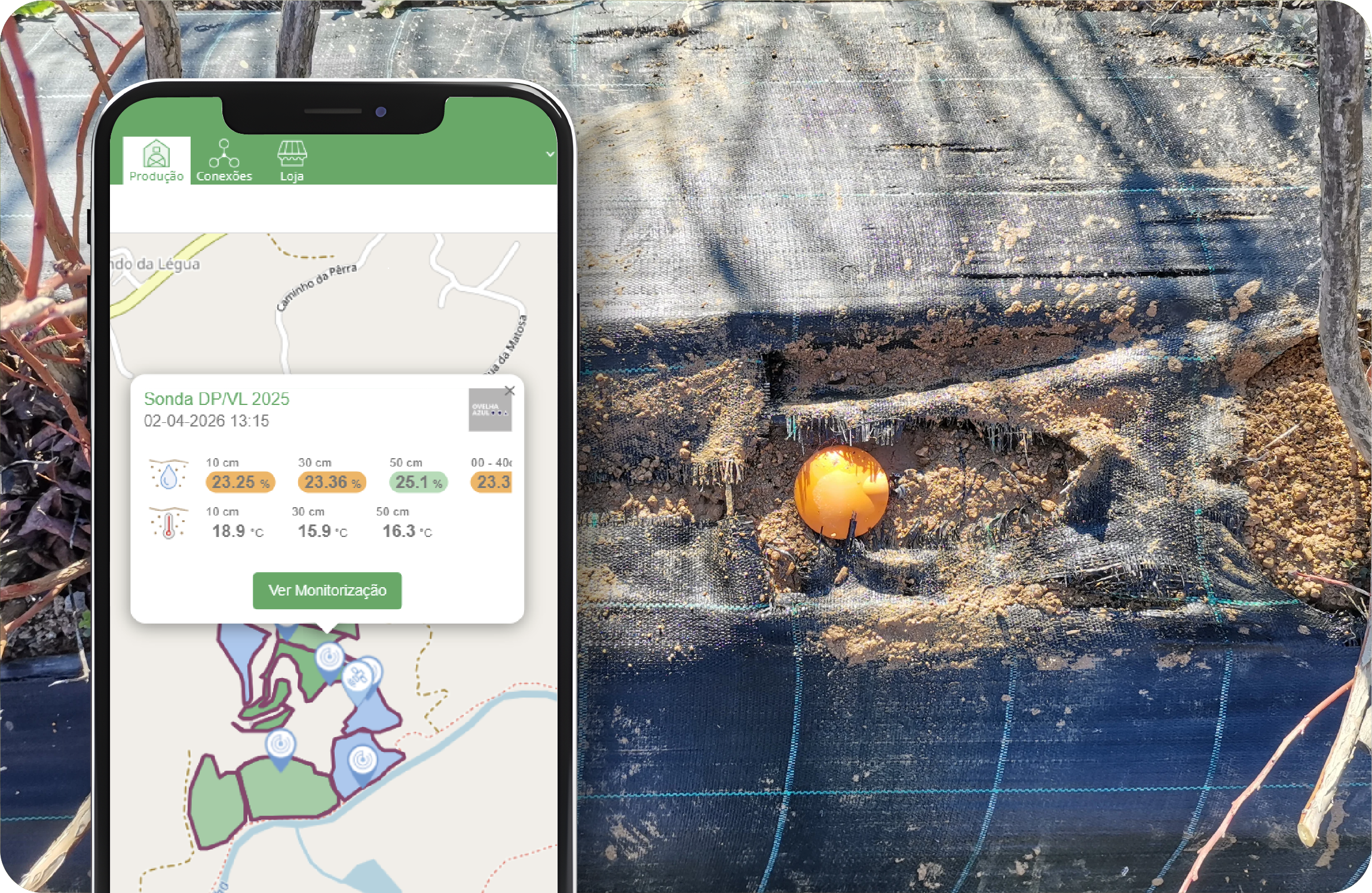
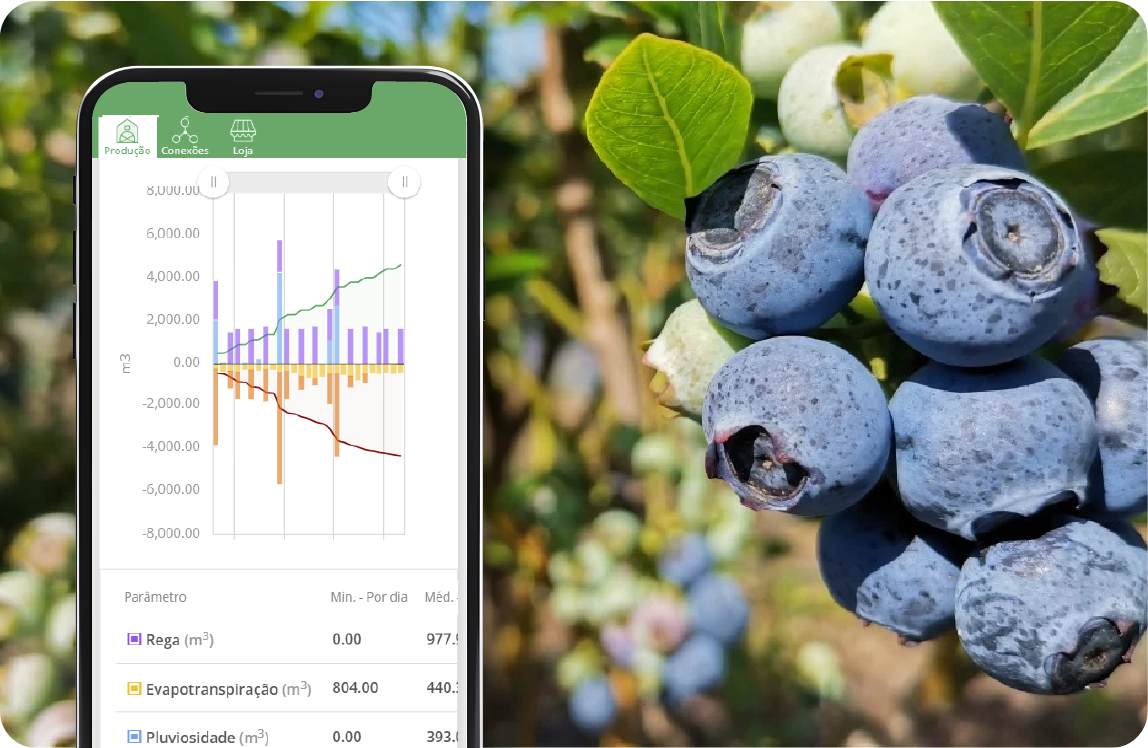
The change began with soil moisture and temperature probes connected to Wisecrop, and with the integration of the irrigation controller for detailed control of each sector.
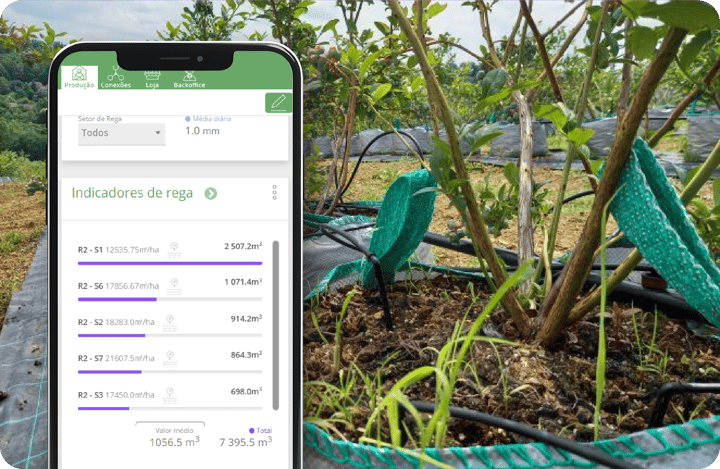
The effect on decision-making was immediate. Instead of assessing the soil by intuition or by eye, Alexandra now has automatic alerts, a detailed history of every irrigation event, and the ability to start, stop or adjust programmes from her phone, without driving out to the field.
"These devices help enormously. We have targets to save more water, and only with these devices is that possible." Alexandra Ribeiro, Grower
The gain is in the precision
Saving water on a farm like this is rarely a dramatic decision. It isn't about cutting volumes abruptly, which would have immediate consequences for the plant. It is about discovering that a sector using 50 cubic metres can use 48 with no downside, and repeating that adjustment, sector by sector, across the whole season.
That is the kind of reading you cannot make without soil data. The difference between 50 and 48 is invisible to the eye, but it shows up at the end of the year.
"Only with these devices can we manage this. Any other way, it was impossible." Alexandra Ribeiro, Grower
On this farm, the adjustment translated into a 4% reduction in water use. A figure that may look modest at first glance, but that represents exactly that: a real, measurable correction, achieved without changing the irrigation strategy, simply by fine-tuning it with information that did not exist before.
From intuition to evidence
Against a backdrop of greater climate variability and growing pressure on water use, the ability to adjust precisely has stopped being an optional advantage and become a competitive factor. For certified farms it is also a practical matter: without continuous records, there is no way to demonstrate what was done.
At Ovelha Azul, irrigation is no longer a decision based on what seemed right. It is a decision based on what the soil shows.
And that shift, in a project built for the long term, makes all the difference: producing with quality, managing with awareness and growing sustainably. The farm is currently expanding its production area and installing more devices in the field.
a ampliar a área de produção e a instalar mais dispositivos no terreno.