












Few crops demand as much precision as the blueberry. The roots are sensitive, the nutritional balance is delicate, and the right amount of water one day can be too much the next. Managing all this by eye is possible, but it tends to cost dearly: a small misjudgement, repeated across a season, always ends up showing in the fruit.
This is the demand Maio Verde, a berry grower in Portugal, lives with every day. Run by siblings Francisco and Maria João Raro, it grows blueberries across 8.2 hectares spread over three farms.
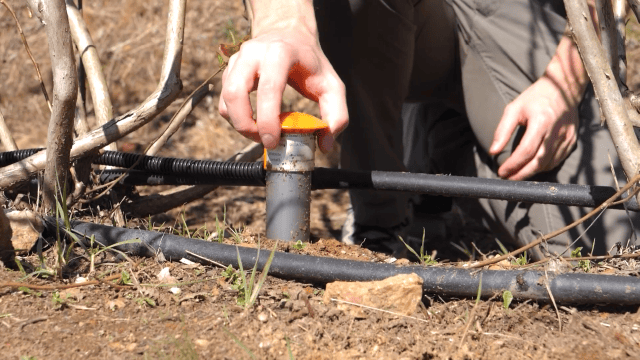
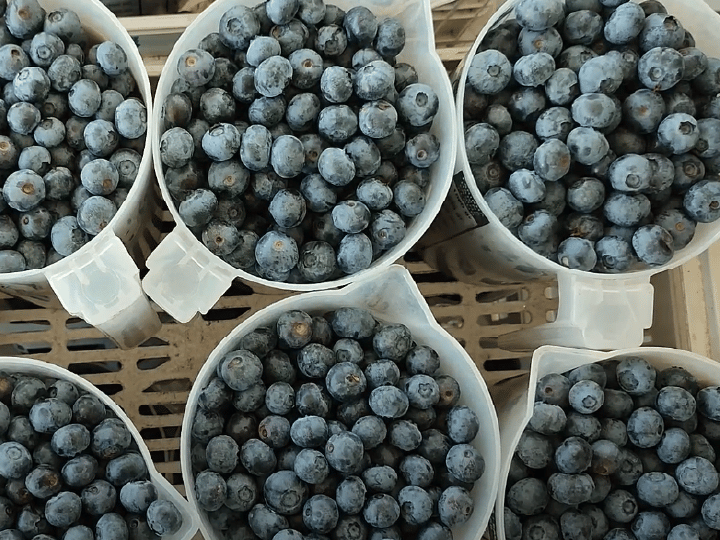
Before Wisecrop, much of the daily management rested on assumptions. Irrigation was the clearest example. With drip lines spread across eight hectares, there was no way to confirm whether every zone received water evenly. Decisions followed scheduled irrigation hours, the theory, without anyone knowing what was really happening in the soil.
Nutrition raised an even more delicate problem. The blueberry is extremely sensitive to the amount of nutrients: too much fertiliser burns the roots, too little compromises the harvest. Without measuring the soil's electrical conductivity, it was impossible to be sure of hitting the right point, and in blueberries that point is narrow.
On top of all this came distance. Francisco and Maria could not be in the field at all hours, and without real-time information every absence brought the same silent question: is everything all right?
"Blueberries are not an easy crop. We get hail out of season, frost out of season... These are all challenges the grower has to manage" sums up Maria João Raro, grower at Maio Verde.
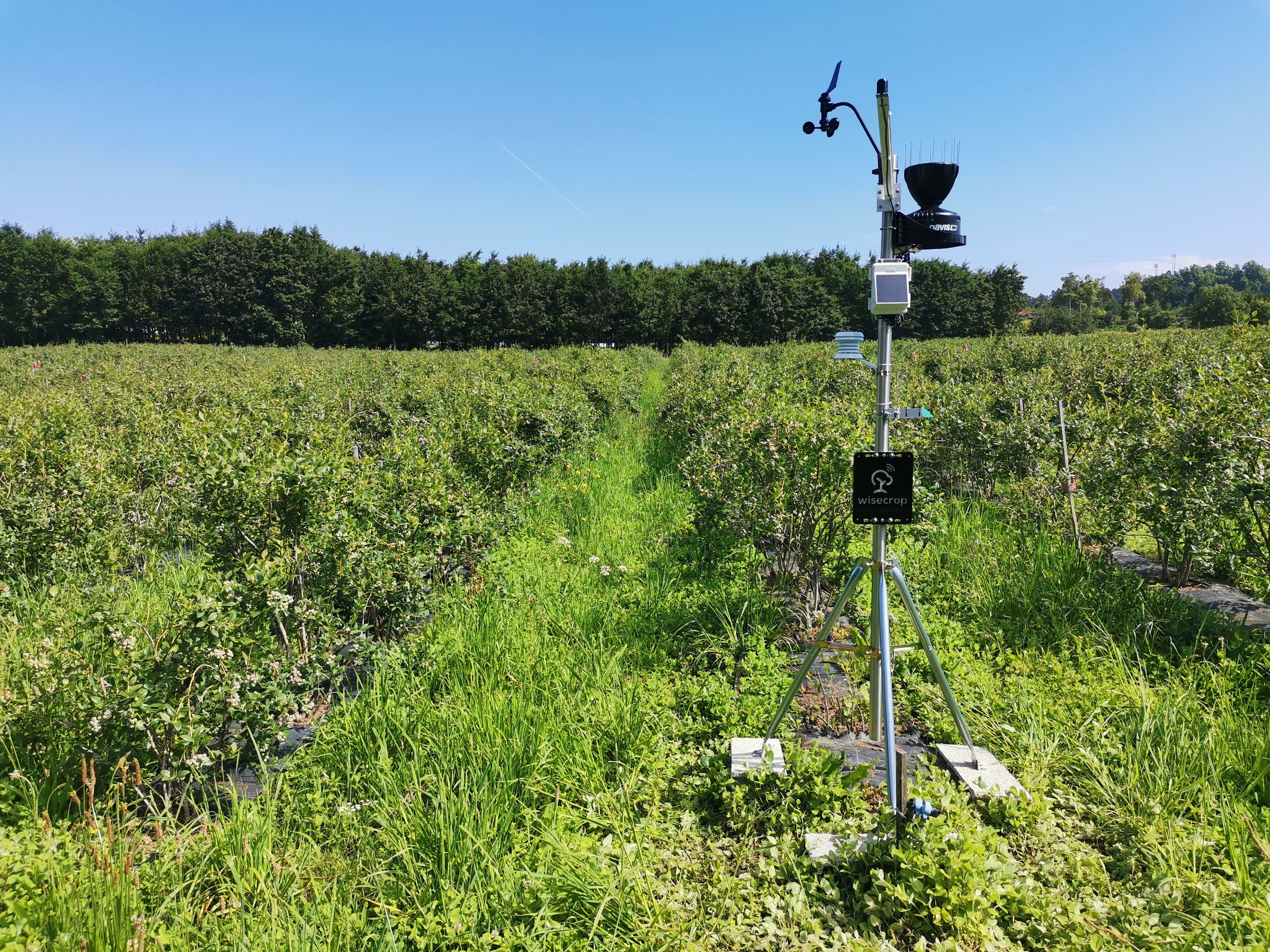
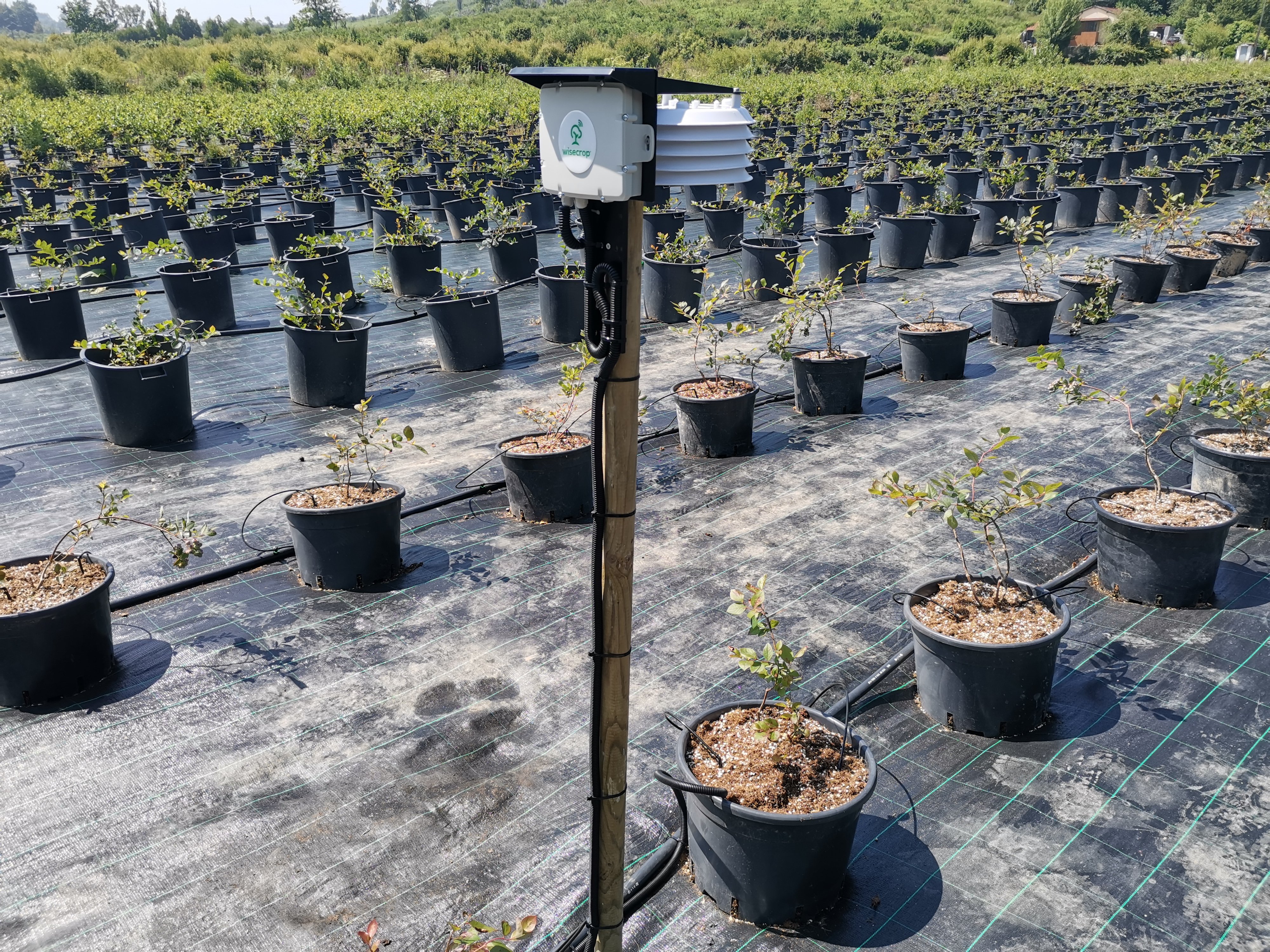
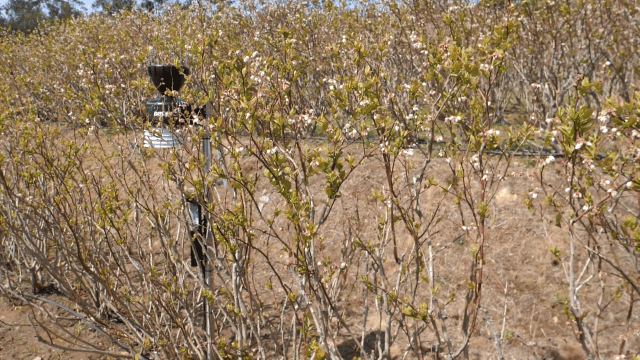
The answer was not to irrigate more or to control less. It was to see. Maio Verde installed a set of six devices that work together like a nervous system for the farm: sensors that sense, controllers that act and a platform that brings everything together in one place.
A soil moisture probe began to show what the plant actually has available. An electrical conductivity sensor brought nutrition into what can be measured, instead of leaving it to estimation. Three Agronic controllers began acting on irrigation based on that information, and a full weather station turned the weather, once an unpredictable threat, into data you can count on.
It is the combination of weather and irrigation that changes the nature of the decision. You stop irrigating because the time has come and start irrigating because the soil and the weather justify it. At the height of summer, when water demand peaks and every excess or shortfall is paid for quickly, that is where this difference matters most.
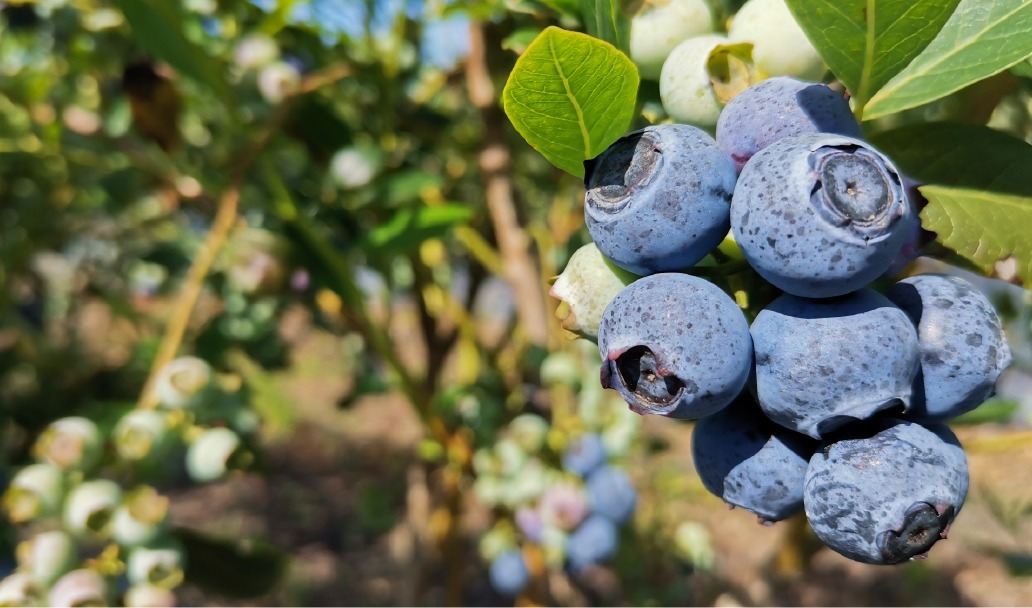
The goal was never simply to use less water. It was to produce better. And it was precisely by irrigating just right, adjusting water to real conditions instead of applying it for safety's sake, that Maio Verde ended up using 32% less water, without compromising the yield or the quality the farm is determined to maintain.
The saving is, in essence, proof that precision works. When you irrigate by eye, you almost always over-irrigate. When you irrigate with data, you give the plant what it needs and little more, and it is the fruit that benefits.
The gain, however, is not measured in water alone. With six devices continuously monitoring the soil and the microclimate, the siblings began managing the farm remotely.
"From a distance, in another part of the country, I can know whether the orchards are irrigating, how much water is running through the pipes... We know at any moment what we can do better," says the grower.
Maio Verde's case says something simple about agricultural technology: it did not come to replace the knowledge of those who produce, but to amplify it. Francisco and Maria still make the decisions about the orchard. The difference is that today they decide with the whole field in front of them, not with the uncertainty of guesswork.
In a sector where water is increasingly scarce and the climate increasingly unpredictable, and in a crop as demanding as the blueberry, deciding on the basis of data is no longer an advantage. It is the condition for producing with quality, year after year.